

Behind The Mask
A Face Beneath

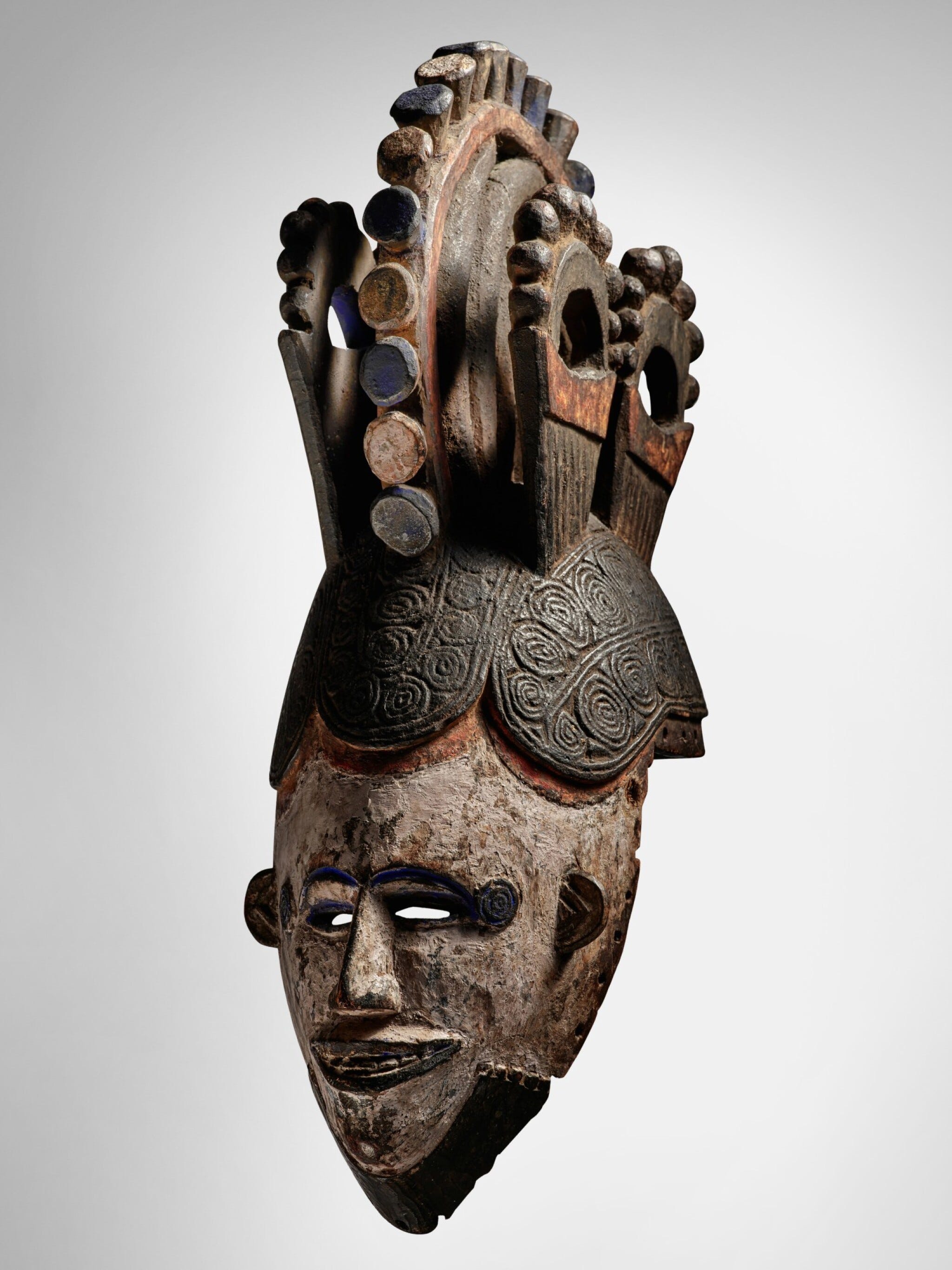
Igbo Helmet Mask, Nigeria
The word mask has a long journey behind it. From the French masque, “a covering to hide or guard the face,” to the Italian maschera, and further back to the Medieval Latin masca, meaning “mask, specter, nightmare.” Even in its roots, the word carries this duality something protective, something hidden, something powerful.
I think about that often, because masks aren’t just objects, they’re something we all wear in life. For me, as a Black Afro-Caribbean man living in the UK, the idea of a mask takes on so many layers. There are the masks I wear to move through certain spaces, to protect myself, to avoid being misread. Then there are the masks I’ve worn to fit in, to belong, to be accepted. Sometimes it feels like survival; other times, like performance.
And yet, when I look at African face masks, I’m reminded that masks are not only about concealment, they’re also about discovery. In so many African traditions, they carry lessons, enforce order, mark life’s transitions, and create moments of communion.
There’s something deeply grounding in that, to know that my ancestors didn’t just wear masks to hide but to connect, to channel, to honour. It reframes the way I think about the masks I wear in my own life. Maybe they don’t always have to be about covering up; maybe they can also be about embodying something greater, something ancestral, something that carries me forward.
For me, engaging with African masks is a reminder that art is not just decoration, it’s survival, memory, and connection. It’s a reminder that what we carry, even the things we think of as burdens, might also be vessels. Masks can divide us from others, but they can also connect us more deeply to ourselves, to spirit, to history.
And so I continue to ask myself, when I put on a mask, whether it’s to survive, navigate identity, to belong, or am I just hiding? Maybe I’m also carrying something forward, embodying something larger, like my ancestors once did?
We Wear the Mask
Paul Laurence Dunbar’s poem expresses the deeper truth of those who wear a mask. People will often show a happy face to the world, while, inwardly, they are suffering.
We Wear the Mask
We wear the mask that grins and lies,
It hides our cheeks and shades our eyes,—
This debt we pay to human guile;
With torn and bleeding hearts we smile,
And mouth with myriad subtleties.
Why should the world be over-wise,
In counting all our tears and sighs?
Nay, let them only see us, while
We wear the mask.
We smile, but, O great Christ, our cries
To thee from tortured souls arise.
We sing, but oh the clay is vile
Beneath our feet, and long the mile;
But let the world dream otherwise,
We wear the mask!
He captured something universal in the Black experience, the way we learn, often from a young age, to hide our truest selves in order to survive. For him, it was the United States at the turn of the 20th century. For me, growing up Black and Afro-Caribbean in 1980s and 90s England, it was the everyday reality of being “othered.”
I can still hear the question, asked casually but loaded, “Yeah, but where are you really from?” The implication was always clear, no matter how northern my accent, no matter how deeply my roots were planted in British soil, I was an outsider. To carry that label, day after day, forces you to adapt. Sometimes you bite your tongue at racism. Sometimes you quieten to ease other people’s fears. But inside, rage builds, and it poisons the very body it’s trapped in.
Masks become survival tools. They let us navigate spaces where we are misunderstood, misrepresented, or dismissed. But not all masks are about suffocation. Some protect us. Some transform us. Some, as in African traditions, open doors to deeper truths.
African masks were never meant to sit behind glass in a museum.
They are alive in ceremony, vessels that bridge the physical and spiritual worlds. They embody ancestors, channel natural forces, and carry lessons across generations. In that way, they’re not just coverings but revelations.
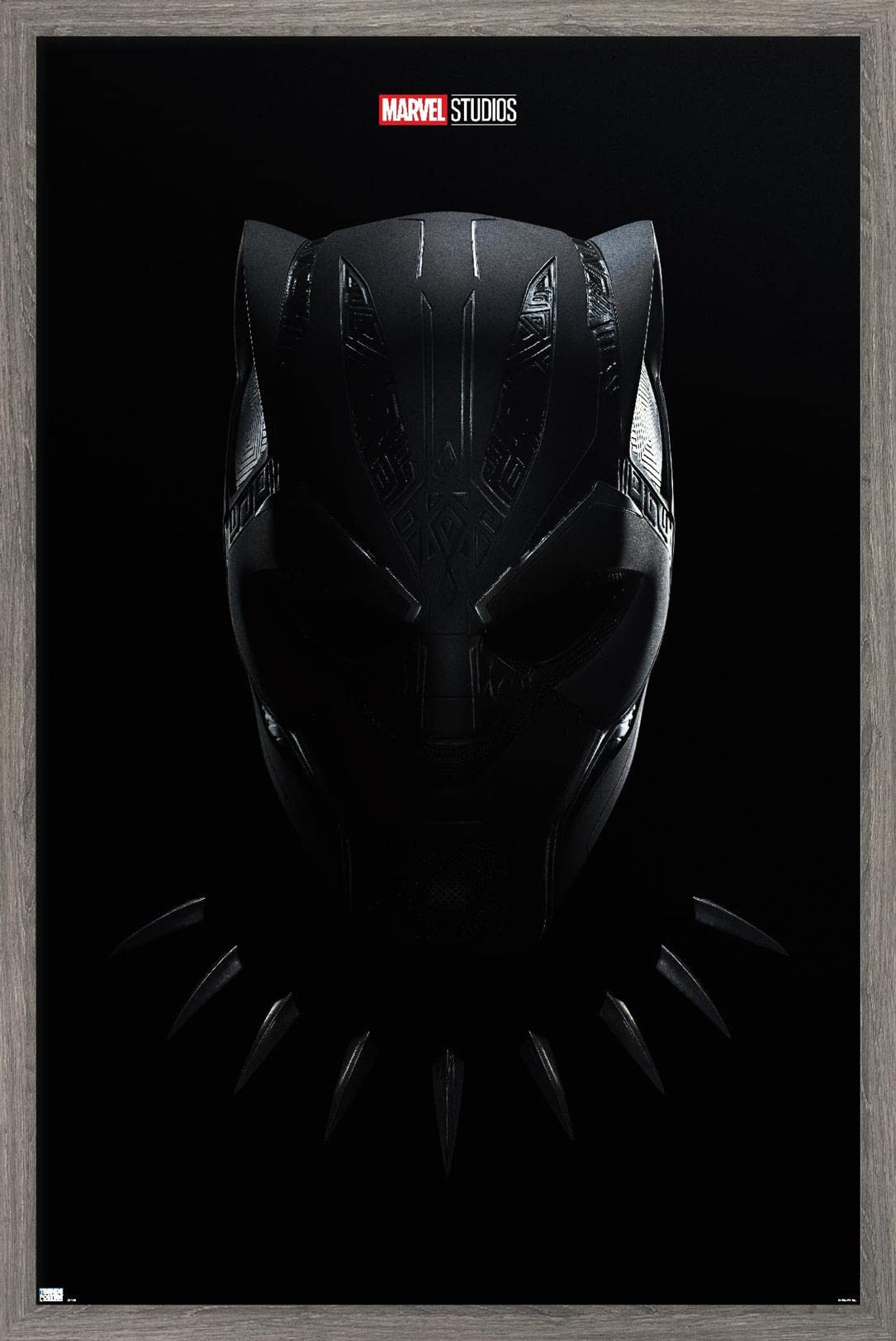
That duality came alive for me when I watched Black Panther. On the surface, it was another Marvel blockbuster. But for me, it was more. It was the first time I saw myself not as the villain, not as the sidekick, but as the hero. The film dramatises the conflicted nature of the mask, it both conceals and empowers. Wakanda hides behind a hi-tech disguise to protect itself from Western exploitation. T’Challa wears the Black Panther’s guise, not only as armor but as a connection to ancestral power. It echoed a tradition in Black art, the central conflict between who we truly are and who we must pretend to be.
But here’s the shift, the also film allowed me to imagine a different kind of mask. One that doesn’t just hide but frees. One I can choose to wear.
This connects deeply to my personal journey of becoming a counsellor and psychotherapist, a path filled with trials and tribulations. In that work, I have had to unlearn many masks, especially the ones I wore to appease or protect others. Perhaps most significantly, I’ve had to learn kindness toward myself. Beyond the roles of a Dad, Partner, Son, Brother, Friend, Colleague, I have come to accept that being just me is enough.
That realization has been transformative. My locus of evaluation no longer hinges on external confirmation. I am more aware of my essence. I no longer feel compelled to mediate every conflict or play devil’s advocate just to smooth things over. Saying “no” has become a healthy part of my relationships. And most importantly, I’ve stopped taking responsibility for other people’s thoughts and feelings. That congruence, living in line with my inner truth has freed me more than any mask ever could.
Of course, I didn’t arrive here alone. Alex Haley once wrote,
“In every conceivable manner, the family is link to our past, bridge to our future.”
My family has always been my bridge. My mum, from Trinidad & Tobago, and my dad was from Nigeria, met in the UK and built a family with my sister and me. My formative years in the North West of England were, in many ways, the happiest of my life. Yet, moving homes and schools due to my dad’s work often brought culture shocks and the painful sting of being marked as an outsider.
Those experiences forced me to confront prejudice, others’ and my own. They taught me resilience, sharpened my communication skills, and, paradoxically, made me less judgmental. I learned to see difference not as a threat but as something to be understood. My parents’ example gave me the grounding to embrace family as a foundation, while also carving out space to discover who I truly am.
Caped Crusader

When people talk about Batman, they often point to that defining moment: Bruce Wayne putting on the mask. That’s when he stops being just a grieving boy and fully commits to becoming Batman, a creature of vengeance, a symbol of fear, a man who has traded his personal healing for a mission that will never end.
On the surface, it’s heroic. He uses his pain to fight crime, to protect the vulnerable, to impose order on chaos. But the mask he wears is also a prison. It hides his humanity, his vulnerability, and his ability to connect deeply with others. Behind the mask, Bruce Wayne is still that wounded boy, frozen in time, unable to let go of rage.
The irony is that Batman’s greatest strength is also his greatest weakness. His mask empowers him, but it also prevents him from healing. He becomes vengeance, but he never finds peace. I recognise that trap, because I’ve felt it in my own life, the restlessness and need to keep going. The danger of defining yourself only through struggle, only through what you’re fighting against, is that you risk losing sight of what you’re fighting for.
Nobody cared…
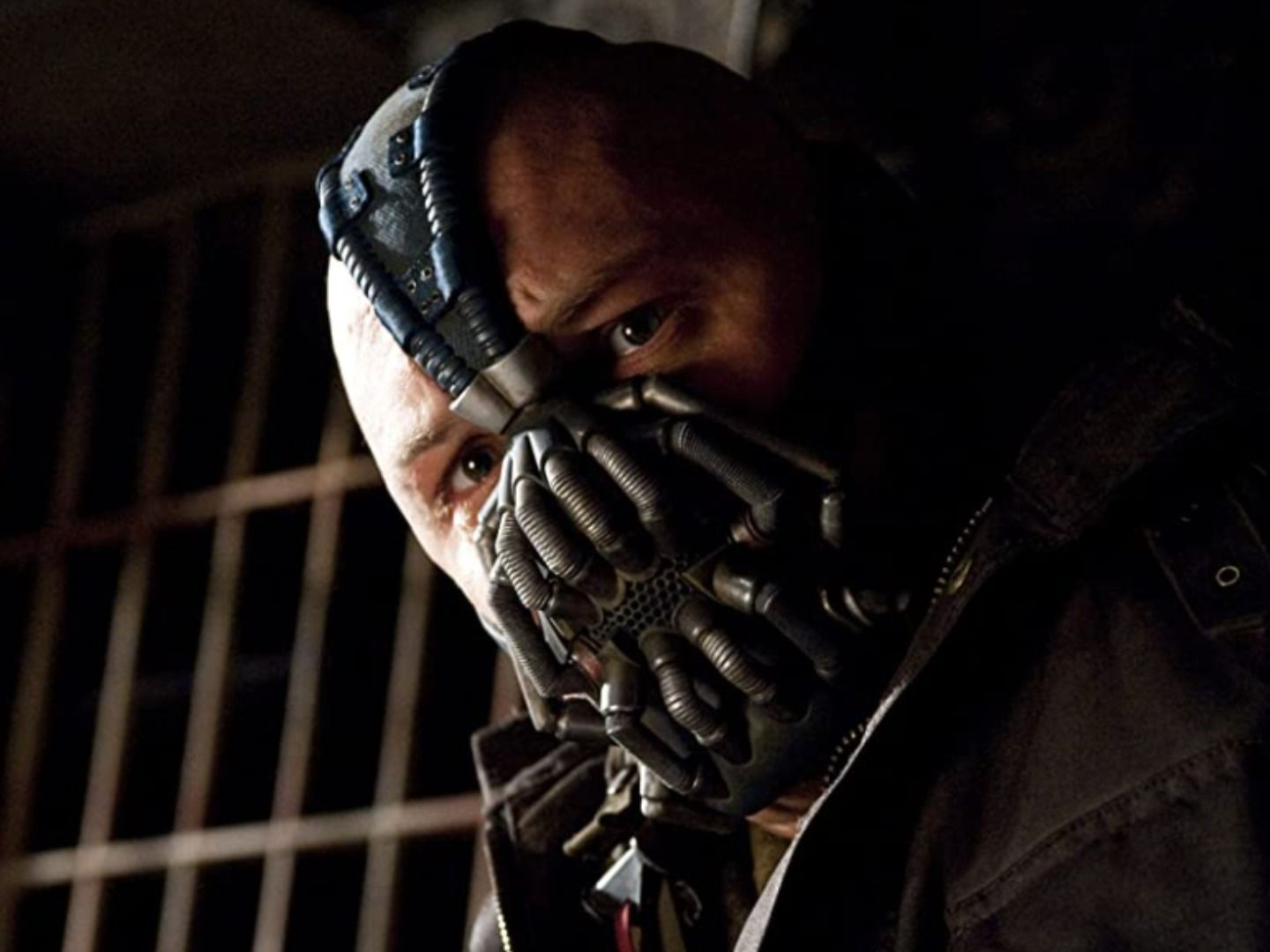
In The Dark Knight Rises, Bane growls the line,
“Nobody cared who I was until I put on the mask.”
It’s one of those moments where a villain tells the truth we’d rather not hear.
Batman and Bane are mirrors of each other, both shaped by trauma, both defined by their masks, both obsessed with control. But the way they wear their masks, and what those masks represent, couldn’t be more different.
For Bruce Wayne, the mask of Batman is chosen. It’s a conscious decision to channel grief and rage into a symbol. He hides his vulnerability behind the mask, transforming personal pain into a mission of vengeance. But it’s also a prison. The longer he wears it, the harder it is for him to take it off. He becomes Batman at the cost of Bruce Wayne.
Bane, on the other hand, has no choice. His mask is a necessity, a medical device that keeps unbearable pain at bay. But it also becomes his armor, his identity, his myth. With it, he transforms from an outcast into a force of fear. People noticed him only once he weaponised his suffering, only once his mask made him terrifying.
The nuance here is striking. Batman’s mask is about hiding vulnerability; Bane’s is about surviving it. One chooses the mask to become a legend, the other is forced into it to keep living. And yet, both are trapped by what the mask gives them, power, recognition, and a role they can never step away from.
That’s where the metaphor cuts close to real life. Many of us know the feeling of being unseen until we put on a mask. For me, as a Black man in Britain, it was the mask of toughness, of assimilation, of silence, ways of surviving a world that too often asked me to shrink or disguise myself. Like Bane, the mask was a shield against pain. Like Batman, it was also a performance.
But here’s the risk, when nobody cares until you put on the mask, it’s easy to forget who you are without it. You start to believe the mask is all there is. And that, I think, is the tragedy of both Batman and Bane, they are unable to imagine a life beyond the mask.
What I’ve learned through my journey into psychotherapy is that the real work is not to glorify the mask, but to learn when to wear it, or set it down. Masks can protect, empower, and even transform us, but they can also imprison us if we cling to them too tightly.
Bane was right: the world often only notices once the mask is on. But the deeper truth and the one I’m still learning to live into, is that real freedom comes when we’re also brave enough to take it off.
Message of the Mask
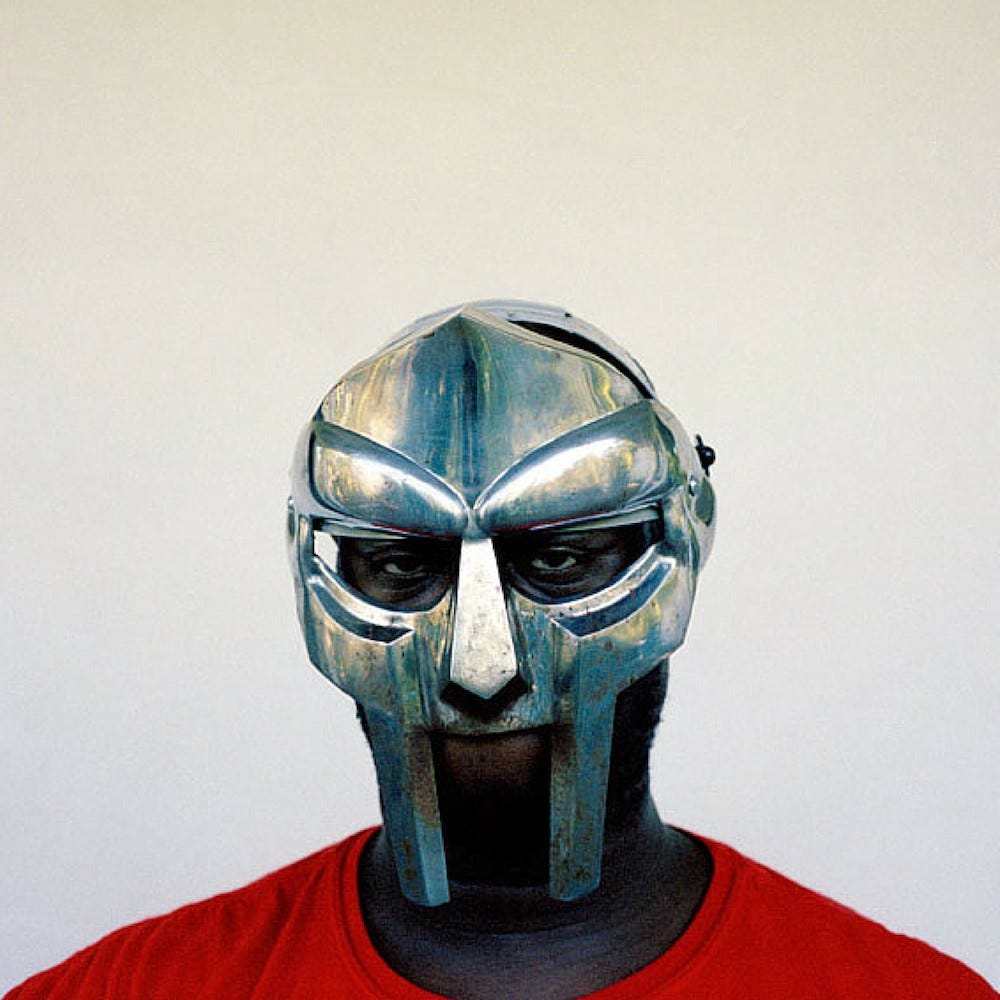
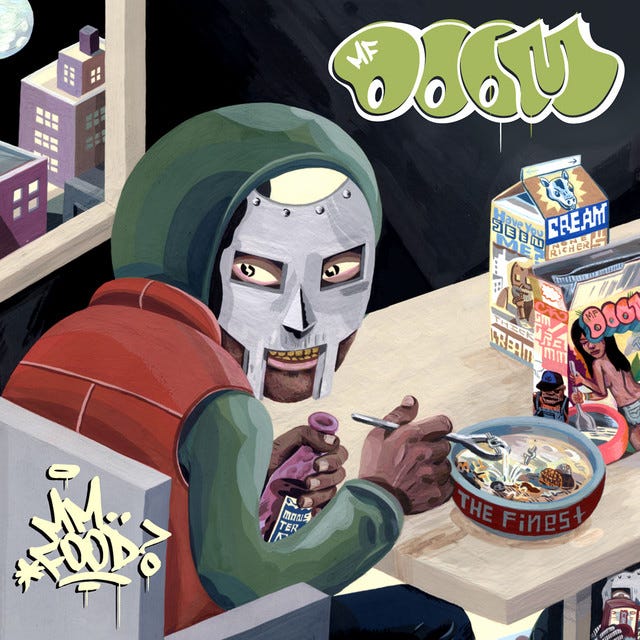
One of my favourite rappers, MF DOOM, made the mask his trademark. But it was never just a gimmick. That mask became a symbol of who he was and what he stood for, resilience, creativity, and the belief that real artistry lives beneath the surface. By refusing to play by the music industry’s rules, he carved out his own lane and inspired generations of artists to do the same.
Even after his passing in 2020, the mask hasn’t lost its power. Fans still wear replicas at gigs and festivals, keeping his spirit alive. Like his music, the mask has outlived him, continuing to shape and inspire new voices long after he left.
Beef Raps
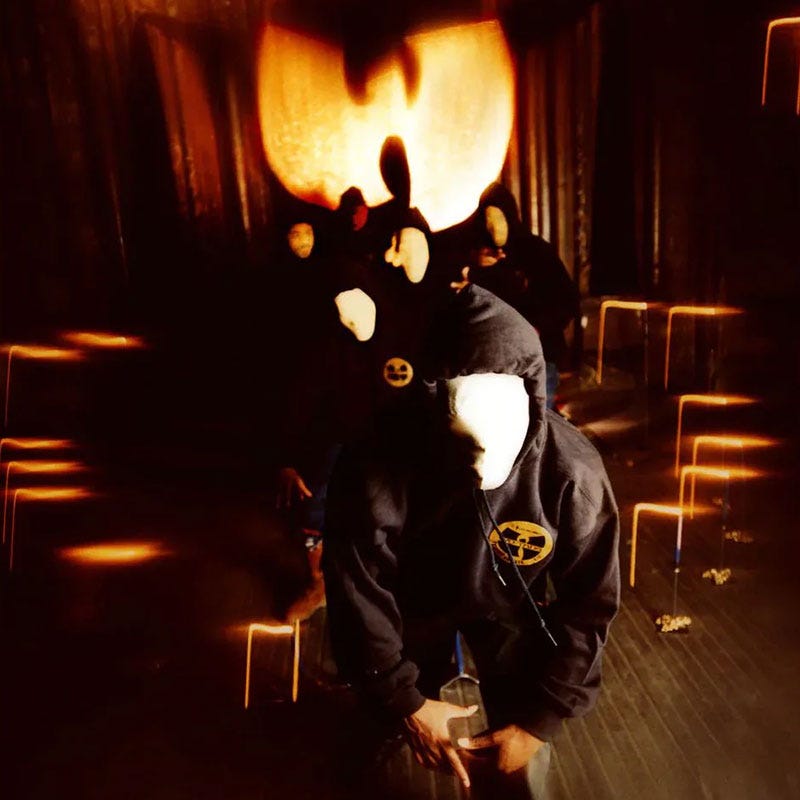
Another favourite emcee of mine is Ghostface Killah. In those early Wu-Tang days, Ghost would often cover his face with a stocking mask in publicity shots and live shows. Nobody ever got a straight answer as to why, which only added to the mystique. Some said he was on the run from the police. Others claimed he was on parole and couldn’t leave New York. There were even whispers about some Staten Island beef that made it wise to stay anonymous.
And to be fair, Ghost wasn’t the only Wu-Tang member to rock a mask back then. But unlike MF DOOM, Ghostface didn’t stick with it for long. By the time “Protect Ya Neck” and “Can It Be All So Simple” dropped, his face was front and center.
“Since the face been revealed the game got real”
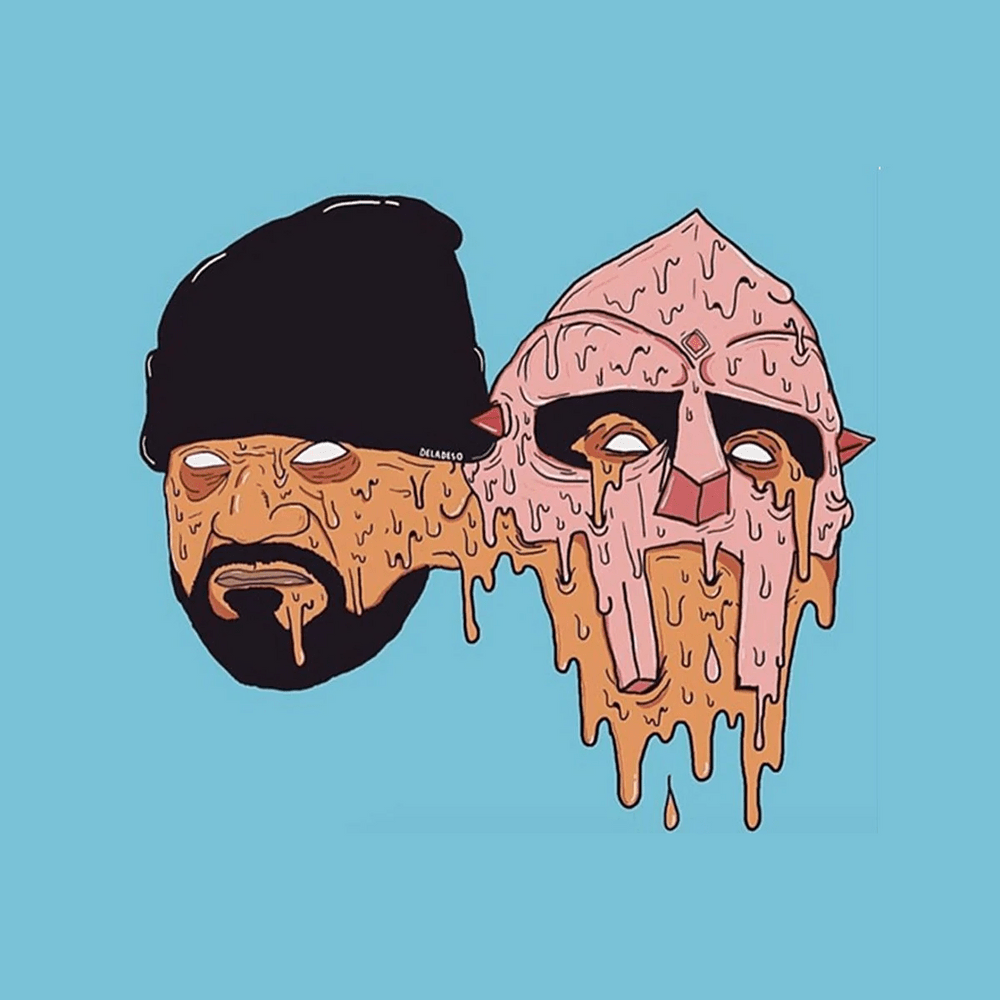
What’s interesting is how his path eventually crossed with DOOM’s. Fans have long speculated about the DOOMSTARKSproject, the long-rumored collaboration between Ghost and DOOM. The album never saw the light of day, but Ghostface confirmed in an interview with Power106 that the material exists and is now with DOOM’s family after his passing in 2020.
The story goes that Ghost was first introduced to DOOM’s beats through a Metal Fingers CD he got while touring back in 2004. “I’m like, yo, who the fuck is this metal finger guy? Like, all his shit was fire. Then I had people do research, and it was DOOM!” Once the connection was made, Ghostface brought DOOM into the studio, and DOOMSTARKS was born…at least in spirit.
Counselling Mask

In therapy, the term "counselling mask" refers to the metaphorical or literal personas individuals adopt to conceal their true selves, used in both art therapy activities, like making an inside-and-outside mask to explore identity, and in psychological concepts such as Carl Jung's social facade to protect vulnerability or the "mask model of narcissism". A secure therapeutic relationship, however, can enable clients to safely remove these masks and reveal their authentic selves.
The theory of personality within person-centred counselling is an ever-changing landscape with new terrain being discovered on a regular basis. New theories are continually evolving Carl Roger’s original ideas about emotional and psychological development. Rogers set out to define his theory of personality with what is know as the nineteen propositions. These nineteen statements were constructed over a period of time, and share his beliefs regarding personality and behaviour, which became the foundation for the approaches know as person centred therapy. The propositions were the building blocks from which Rogers began to challenge what he saw as the limitations of the psychodynamic approach, and develop a new approach to therapy.
Counselling therapies and in particular the person centred approach are often subject to questioning and examination with regards to treatment and support of the psychologically disturbed. Advancements in the field of person centred therapy and psychopathology seek to promote new developments, which illustrate the process of change through therapeutic relationships.
The defining and understanding of ‘self’ is a key element to unlocking the various ideas about emotional and psychological developments of individuals. My initial understanding of self could be simplified as a person’s inner feelings, or what I term the ‘soul controller’. It allows a person to identify themselves as a unique individual, that experiences thoughts, feelings, emotions and perception specific to themselves. This image of ourselves is often termed ‘self concept’.
According to Carl Rogers it is, "the organised, consistent set of perceptions and beliefs about oneself.” Each person has their own self-concept that is a reflection of all their personal qualities, thoughts and attitudes. A person’s self-concept is the “some of all self parts.” It is generally thought that the development of the self-concept begins in early childhood, although how it develops and the distinct stages are still challenged and argued.
Carl Rogers believed that there are three components to self-concept:
· Self Image – the view you have of yourself
· Self Esteem – how much value you place on yourself
· Ideal Self – what you wish you were really like.
A fundamental principle of the person centred viewpoint is that to a large degree, our behaviour is actually a reflection of how we feel about ourselves, and the world we live in. Therefore, often the things we do, are a result of how we evaluate ourselves.
The Ideal Self is the person you have the potential to be if you lived in an ideal world. For example, an ideal world where all the conditions are perfectly met and you live in a place where complete unconditional positive regard exists all the time. The reality is that it’s rare for individuals to grow-up in an environment where these conditions are constantly present. Because we have restrictions and standards placed on our organismic self, we develop ‘conditions of worth’. This is wear the lure of the mask can appear.
“Fortunately the disapproval and rejection that many people experience is not such as to be totally annihilating. They retain some shreds of self-esteem although these may feel so fragile that the fear of final condemnation is never far away.”
- Dave Mearns
A person’s self concept is influenced by how they are viewed by other people. If an individual’s self-concept is based on the values of significant people in their life, then incongruence between self and experience can develop. Behaviour is purposeful, so we behave in whatever way it takes for our needs to be met. As a result, we react or respond to the reality we perceive. An excellent example of this is a dehydrated person observing a mirage of a waterfall in the desert. The person may walk miles in the quest for what they perceive to be real (in this case a source of water), in order to quench their thirst. Because values are attached to our perception of ‘I’ or ‘me’, and the structure of self is formed in a fluid manner, unconditional positive regard plays a crucial role. In the person centred approach human development starts in infancy, our collection of thoughts, qualities and beliefs start off as flexible open pictures of ourselves. As we become older, our perceptions become more rigid and closed. If a persons experience is dictated by conditions of worth and the introjected values of others, then their self becomes smaller and smaller. They become detached from their true feelings and therefore unable to become ‘fully functioning’. For a person attending therapy, there organismic self is not readily available and so one could describe their state as psychologically unhealthy. By using the core conditions, the counsellor provides a fertile environment for the client to find himself or herself. During a consultation, one of my clients reflected, “I don’t know who I am”. She had spent most of her life trying to please her parents (particularly her mother) and live up to the standards set by her older sisters. The uncomfortable place my client was situated in at that point may be described as the ‘edge of awareness’. As we began to work through various issues, my client began to identify her own motivations, needs and desires. What I observed through the process was the client’s shift from confusion and seeking outward approval, towards trusting herself.
Rogers has described this, as the internal locus of evaluation and for the counsellor one of the most significant moments in therapy is the point at which a client recognised this reference point within themself perhaps for the first time.
Clients often arrive wearing what I would call a “counselling mask”. The polished version of themselves that has helped them survive, fit in, or meet the expectations of others. At first it can feel safer to stay hidden behind that mask than to risk vulnerability. But with trust and time, something shifts. The mask loosens. They begin to show themselves, sometimes tentatively, sometimes with relief, and it’s in those moments that the work of healing truly begins.
Behind The Mask
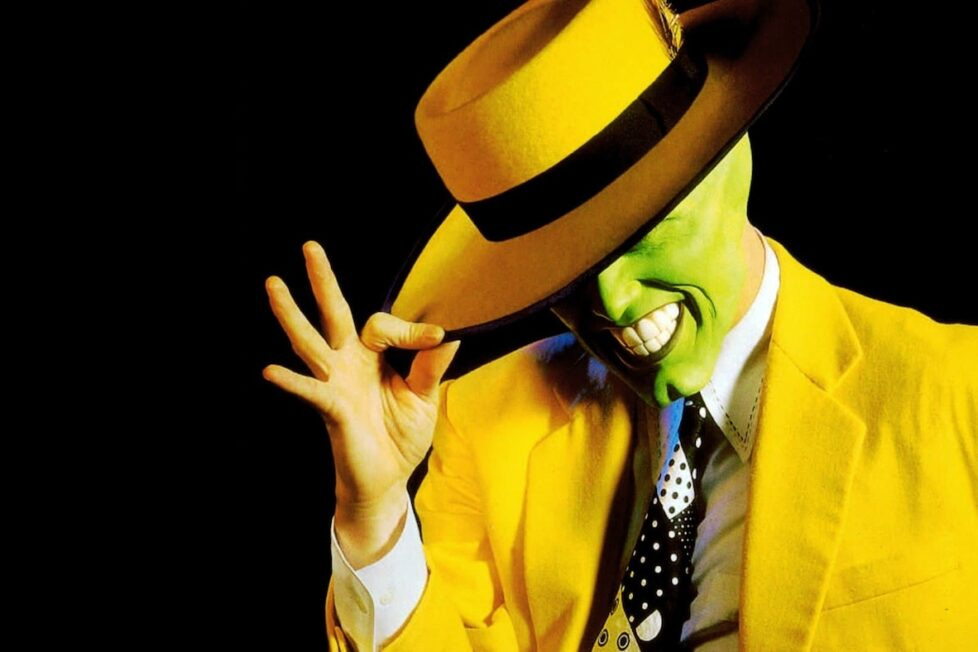
So now, when I reflect on the idea of masks, I see them differently. Yes, they can stifle us. Yes, they can hide our rage, our truth, our essence. But they can also be chosen. They can be ceremonial, empowering, and even liberating.
The real challenge is learning to tell the difference, to discern which masks hold us back, and which ones help us carry forward the wisdom of our ancestors, the strength of our culture, and the freedom of being ourselves. Some masks are prisons we inherit from history or from pain. Others are tools, vessels, even gifts, reminding us that survival and expression are not always at odds.
For me, this work is ongoing. Every day I ask myself, Am I wearing a mask that hides me, or one that frees me? The answer isn’t always clear. Some days, I still catch myself slipping back into old habits of silence, of performance, of appeasement. But other days, I notice the shift, the moments when I stand in my truth, when I choose not to shrink, when I embrace the kind of mask that connects me to my essence rather than concealing it.
Perhaps that is the paradox of masks, they can both divide and unite, conceal and reveal, protect and suffocate. What matters is not only whether we wear them, but how we wear them and for whom.
And maybe the deeper invitation is to keep asking the questions, to stay awake to the masks we inherit, the ones we put on, and the ones we are brave enough to lay down. Because sometimes the most radical act is not choosing a new mask, but daring to be seen without one at all.
“Love takes off masks that we fear we cannot live without and know we cannot live within.”
- James Baldwin
I keep thinking about this; in thinking of intentional masks, I would bet money that artists (music, books, painting, etc.) who adopt a nom de plume/pseudonym produce more, and are judged by others as more creative, than people who keep their own name.
1. I listen to MF Doom at least once a week, but never thought to look up anything about him - I just thought he was brilliant. I didn't know he had died, but I'm glad I learned it from you.
2. If you haven't read The Late Mattia Pascal, and you are interested, I'll bring it down to Rick's for you!