

Learning Curve
The Art of Learning

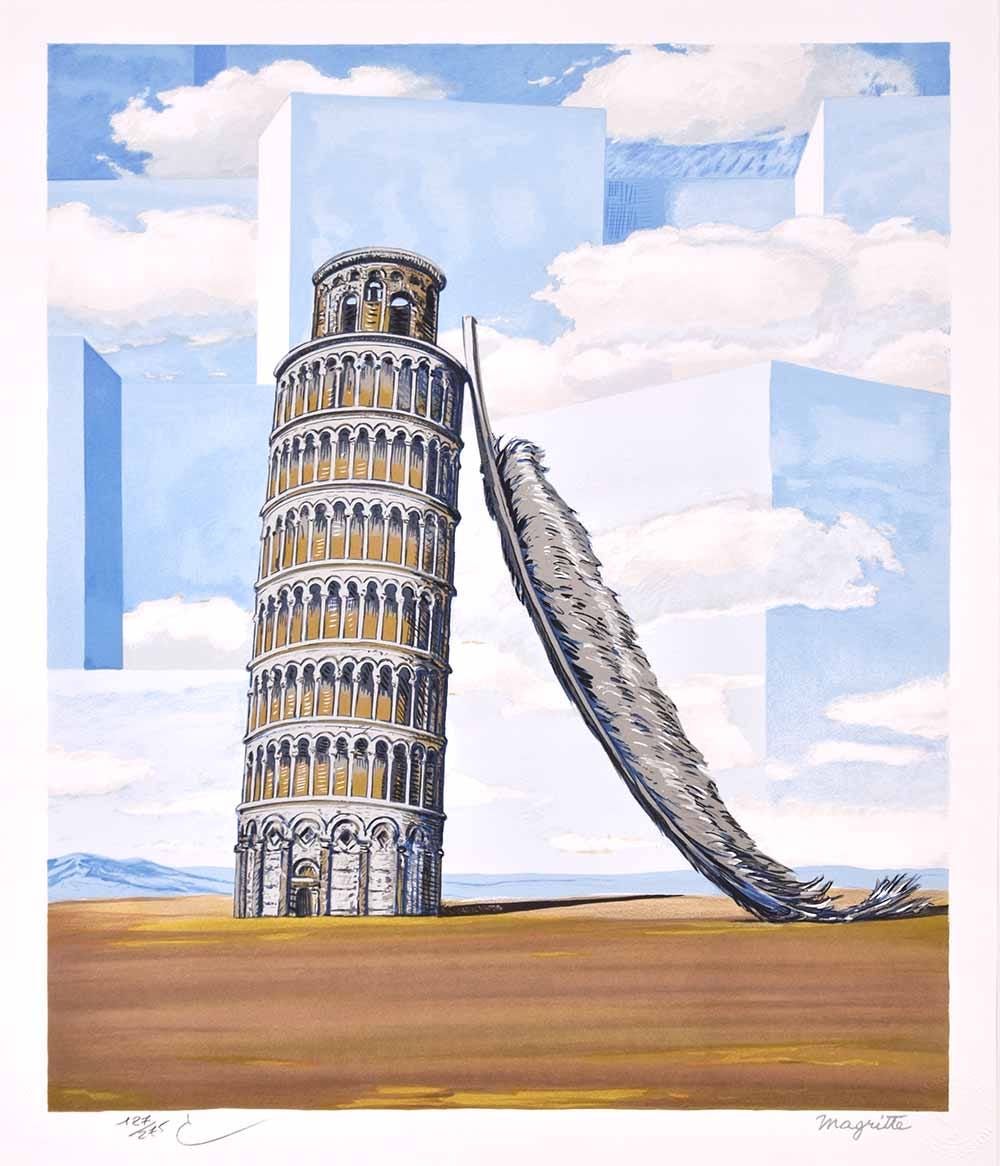
René Magritte work refuses to play by the expected rules of space, logic, and physics. Placing the Leaning Tower of Pisa atop a delicate feather subverts natural order, just as real learning subverts our assumptions about progress. The tower doesn’t stand because of strength, but because of balance. In learning, effort alone doesn’t guarantee growth, it’s awareness, adaptation, and sometimes letting go of “how it’s supposed to work” that moves us forward.
Surrealism bends time, past, present, and future coexist. In Memory of a Journey, time is dreamlike and this reflects the most profound truth in learning, the most important shifts don’t happen on schedule. You might spend months grinding with no visible gain, then experience a sudden leap. Or revisit an old idea and finally understand it in a new light. And like Magritte’s art, learning is often confusing before it’s clarifying. So, if you're navigating that space between what you know and what you’re still becoming, you’re not lost. You’re exactly where you should be. You’re living the surreal art of learning, discovering that strength often comes in forms the rational mind can’t explain.
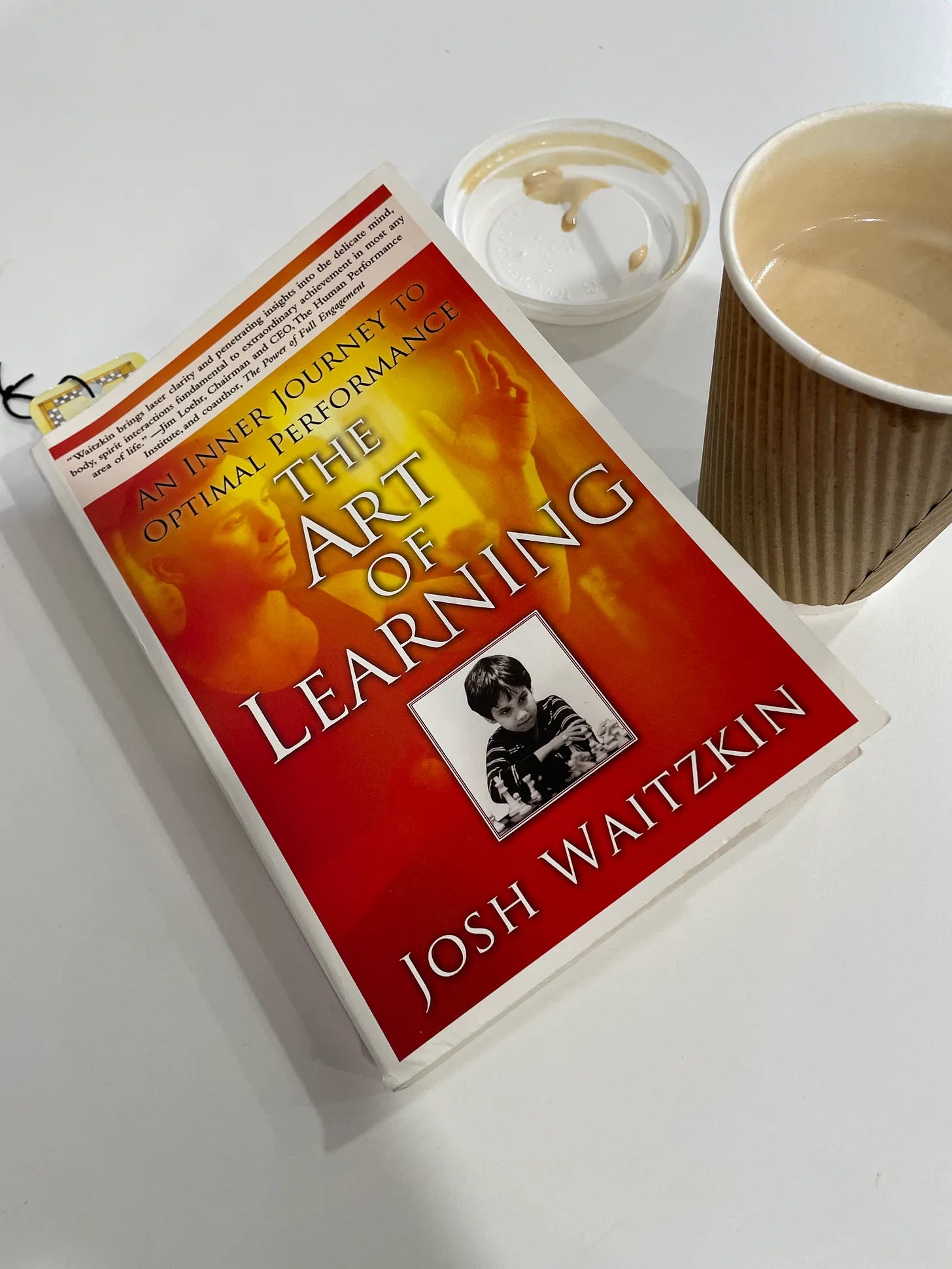
I've had some time in my summer holidays to reflect on my current 'headspace', Growth is real but not always visible day-to-day. Embracing the beginner's mind takes humility, especially if you’re used to being competent. It requires unlearning the instinct to always measure success by immediate results and instead, seeing value in subtle progress. Josh Waitzkin’s The Art of Learning is a powerful book because it’s not just about skill-building but about transformation through struggle. His emphasis on incremental learning, presence under pressure, and the internal vs. external scorecard is gold, especially for someone who's consciously trying to balance discipline, drive, and patience.
The Art of Learning
Here are a few thoughts I’ve been processing and have helped me to stay grounded:
1. Frustration Is Data, Not Failure
Feeling frustrated doesn’t mean you're off track, it means you're pressing against a limit. That’s precisely the edge where adaptation occurs, Consider using frustration as a signal, not a stop sign. Waitzkin talks a lot about losing well, making each setback a deeper investment in your process.
2. Discipline Without Rigidity
Discipline can be sustainable if it's paired with compassion. Think ritual, not rigid. Structuring days with learning blocks, but being flexible with emotional energy. Some days the best discipline is rest, that's part of the game, too.
Now if I'm being completely honest, this is perhaps one of my main challenges, and definitely an ‘achilles heel’. I’m learning to bend without breaking.
Let’s be real, for those of us who are naturally driven, the kind of people who set alarms to train, colour code calendars, or feel guilty for not making the most of the day, discipline isn’t always the issue. The problem is often the trap of over-discipline.
We confuse rigor with rigidity. We start treating the process like a machine, or something to optimise, not something to live. And when we inevitably hit a wall (fatigue, stress, emotional flatness), we mistake it for failure, when really, it’s just feedback.
That’s where Josh Waitzkin’s idea of "making chaos your home" becomes so useful. And where Marcus Aurelius’ quiet insistence on aligning with nature not ego cuts through the noise.
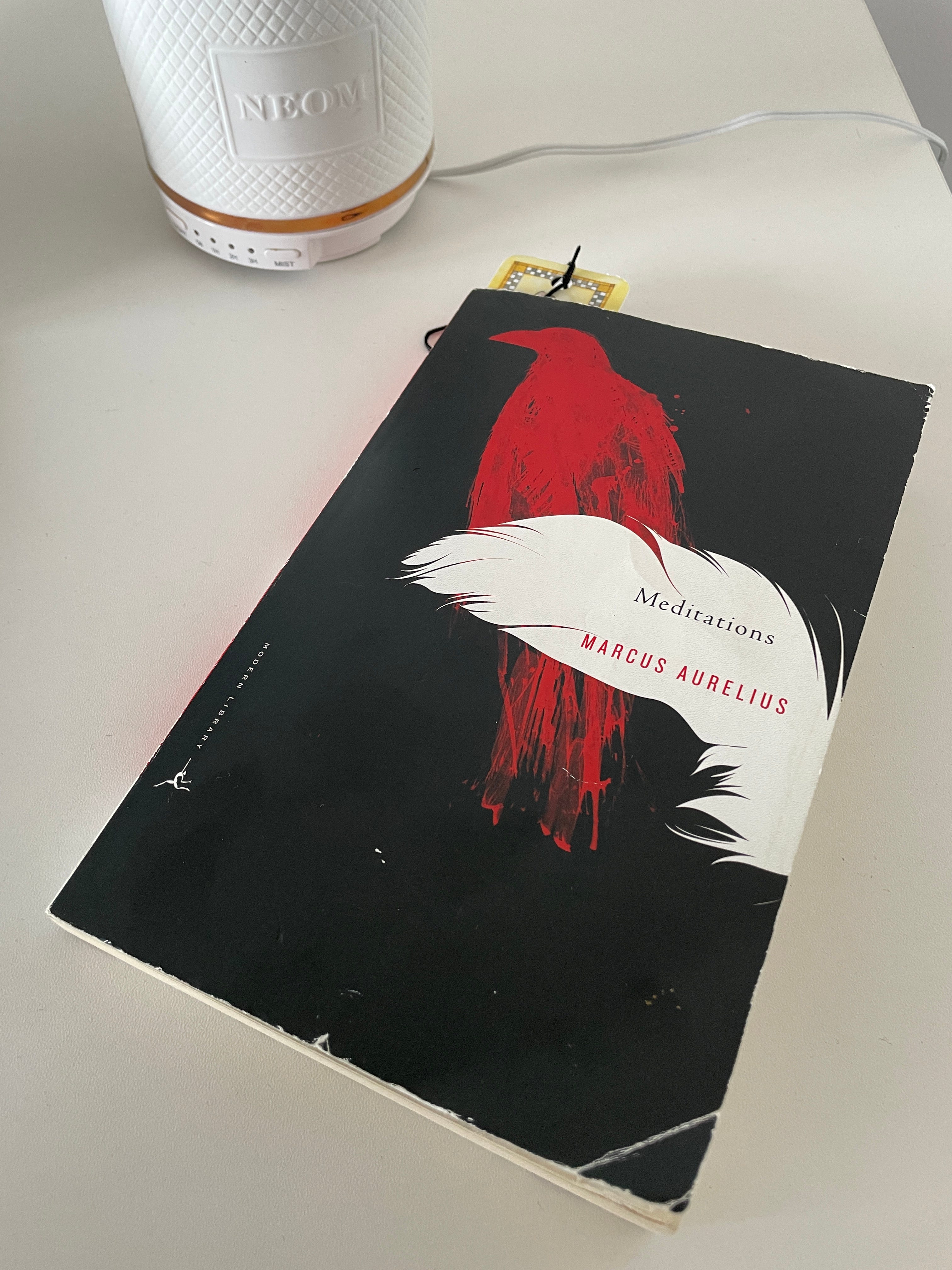
“If you are distressed by anything external, the pain is not due to the thing itself, but to your estimate of it.”
Marcus Aurelius
Sometimes, discipline isn’t about pushing through, it’s about listening better.
Listening to the moment, to your energy, to your actual learning curve, not the one you hoped you’d be on.
The irony? True discipline isn’t rigid at all. It’s adaptive. Think ritual, not routine. A ritual is something you return to with intention, but it has space for breath, for reflection, even for pause.
Here’s a truth I’ve had to admit to myself
“I love structure. But I can’t live inside a cage of my own making.”
When I ignore that, and I punish myself for not hitting my marks or try to override my fatigue, I don't just risk burn out, I detach from the very thing that gives discipline meaning: presence.
There’s a phrase I return to when I’m in that place of self-friction:
“What if discipline was more like devotion?”
Not punishment. Not perfectionism. But a steady return to the practice, no matter how messy it looks.
So how do I try and apply “discipline without rigidity” without letting it slip into laziness?
Here’s a few things that have helped me
Check in, not just check boxes. Before starting a session, ask: What’s my capacity today? Not as an excuse, but to be honest. Energy is a resource. You don’t win by ignoring it.
Redefine “consistency.” Sometimes it’s a 60-minute BJJ comp class. Other times, it’s 20 mins stretching. Depth matters more than volume.
Let rest be strategic, not shameful. Waitzkin talks about how recovery is part of mastery. Even elite performers know when to go inward, get quiet, reset. Pushing past that for ego or external optics, is a fast track to stagnation.
The deeper truth? Discipline isn’t about control. It’s about relationship.
With your body. Your attention. Your mind. Your purpose.
And relationships, if they’re going to last, you need space to breathe.
3. Drive Needs Direction
Not Just Speed! It’s easy to get caught in ‘more-is-better’ thinking. But deep learning thrives in focused slowness. Rather than racing through material or milestones, more questions,
“Am I learning with depth, or just covering ground?”
Waitzkin emphasises depth over breadth, mastering one movement in Tai Chi teaches you principles that apply to hundreds.
4. Trusting the Process Means Trusting Yourself
This might be the hardest part, believing that your investment will yield returns you can’t yet see. Beginner’s mind isn’t just about humility, it’s about faith in your evolving capacity. Keep track of micro-wins, things you can do today that were once hard. This helps anchor progress in evidence.
The key to pursuing excellence is to embrace an organic, long term learning process, and not to live in a shell of static, safe mediocrity. Usually, growth comes at the expense of previous comfort or safety. The challenge is staying in range of the long-term aspirations/goals. Having a healthy perspective when under pressure or suffering. This is at the core of the art of learning.

Self-Resilience Man postpones or remembers; he does not live in the present, but with reverted eye laments the past, or, heedless of the riches that surround him, stands on tiptoe to foresee the future. He cannot be happy and strong until he too lives with nature in the present, above time.
- Ralph Waldo Emerson
This synthesis of learning, is not just studying ideas, but embodying them. Walking the razor’s edge between ambition and presence, growth and acceptance. And that edge, difficult as it is, is where transformation happens.
I’ve been attempting to incorporate some practical approaches into my daily practice
🛡️ 1. Morning: Anchoring in Intention
“You could leave life right now. Let that determine what you do and say and think.” — Marcus Aurelius
Routine: 5 minutes of breath-work or stillness. I try and do this first thing in the morning, I’ve been using the Insight Timer app
Focus on the sensation of being alive. Let go of the urge to fix, improve, chase. Just be. Then I usually have a quick check in… What matters today? What challenge could I meet with clarity, not reactivity? What can I let go of that’s no longer serving me? This can help set the tone for a day, deliberate embodied action and not aimless striving.
⚒️ 2. Mid-Day (Usually after work): Deep Practice (Waitzkin Style)
“Growth comes at the expense of previous comfort or safety.” — Josh Waitzkin
Routine: 3-4 sessions of 60–90 min focused learning or skill work. Waitzkin emphasizes layering and chunking: start slow, deep, and small. Make it meditative. Explore nuance. For example: Instead of reading more, reread a profound paragraph and dialogue with it. Going to BJJ with a specific area or technique to focus on.
However, instead of just grinding a skill, isolate one subtle movement or decision pattern and refine it. With my BJJ training, I’ve been focusing on my hip pinning, which has helped both is control, passing and escapes.
Disruption practice (stress inoculation): Working amid stress, or tired state, to simulate real conditions. For me, this might mean comp class in BJJ, or the assault bike at the gym. Learning to maintain clarity under pressure is one of Waitzkin’s biggest teachings.
🧘 3. Reflection + Detachment (Evening Wind-Down)
“Don’t hanker after what you don’t have. Instead, fix your attentions on the finest and best that you have and imagine how much you would long for these if they weren’t in your possession.” — Marcus Aurelius
Routine: Read or silent sit. No devices. Evening reflection questions: Where did I choose presence over reactivity today? What discomfort did I endure that helped me grow? Did I live aligned with my nature today or drift into distraction? I’ve struggled to get back in the rhythm of journaling, but writing down (or verbalising) one small but meaningful thing I learned or saw in the day is a great tool. The art of learning lives in seeing the micro-shifts.
🌱 Philosophical Pillars:
The Present Is the Arena 🏟️ Emerson was right, you can’t be strong until you live in the present. That doesn’t mean rejecting ambition, or forgetting the past, it means returning to presence as the place where ambition is fulfilled. Don’t seek clarity in distant horizons; find it now, in the breath, in the decision before you.
Excellence Is a Byproduct, Not a Target 🎯 Waitzkin reminds us, when we chase the trophy, we dilute the process. Focus instead on the quality of your attention, your response to adversity, and your commitment to truth over ego.
Adversity Is Sacred 🤲🏾 Marcus Aurelius faced plague, war, betrayal and used them as fuel for virtue. Likewise, don’t ask for ease, ask to become equal to the storm.
The Man In The Arena - Teddy Roosevelt
The Journey
I really enjoyed the Women’s Euros recently, and have been delighted to see the long overdue exposure and celebration of women in football. No doubt the learning curve and struggle all the players go through is difficult enough, only to then be multiplied by the prejudice and stereotypes directed towards female footballers.
The familiar story of setbacks and challenges, are ever present for many athletes. This was compounded further to one particular player in the England team - Jess Carter. She faced racism and body shaming across social media during their tournament, but manage to overcome the naysayers. After a stellar performance and victory for England in the final, she reflected on her personal experience and journey.
Something I’ve been struck with, is the willingness to accept all of this, for when it all works out. Yet sometimes the learning is that it may not, or at not as we expect it.
This realisation is one of the hardest to metabolise on the path of growth, the willingness to commit, knowing that there’s no guarantee it will unfold the way we imagine. That maybe the point isn’t to control the outcome, but to become the kind of person who grows, regardless of it.
This is where the philosophies of Waitzkin, Marcus Aurelius, and Emerson all quietly converge, in the acceptance of uncertainty without collapse, and the cultivation of inner architecture sturdy enough to remain standing even when the plan doesn’t.
When we start on a journey, whether it’s learning a craft, training the body, mastering a discipline, or cultivating the self, we often carry a quiet contract in the back of our minds: If I work hard, stay focused, and commit, then it’ll all work out.
And sometimes… it does.
But often? It doesn’t at least not in the shape we imagined.
The test then isn’t whether we still reach the goal. It’s whether we can remain faithful to the process when the scoreboard goes dark. It’s whether we can stay in love with the learning, even when the rewards are delayed, obscured, or never arrive.
“You have power over your mind — not outside events. Realize this, and you will find strength.”
— Marcus Aurelius
This doesn’t mean becoming passive or giving up hope. It means rooting yourself in the present, in the practice itself, not the prize. It means doing the work, not for the guarantee, but for the growth it demands of you. That’s the real return.
And in that light, even failure becomes a teacher. Even plateau becomes a pause worth listening to. Even fatigue becomes sacred. Even rest is an act of discipline.
The Divine Pony Tail
Baggio is known as Il Divin Codino ("The Divine Ponytail"), for the hairstyle he wore for most of his career, for his talent, and for his Buddhist beliefs.
Following his fateful penalty miss, he was The Man Who Died Standing
Baggio’s story was never really about the penalty.
We remember the miss frozen in time, broadcast endlessly, because it feels symbolic. A man who carried the hopes of a nation, who’d done everything right, and still… the ball went over the bar. And in that moment, he became human. Not fallen but real.
The man who died standing. Not because he failed, but because he kept his posture, held his ground in the face of heartbreak.
But maybe we missed the point.
Maybe Baggio wasn’t just an athlete haunted by a moment. Maybe he was a living example of what it means to commit to something bigger than outcomes: to learning, to beauty, to discipline, to the struggle itself. That divine ponytail, part style, part symbol wasn’t about perfection. It was about grace under fire, and faith in process, even when it doesn’t deliver a fairytale ending.
And maybe that’s the lesson for the rest of us.
That the true cost of growth isn’t failure, it’s the willingness to stay open-hearted when things don’t go to plan. That excellence is a journey, not a peak. That self-resilience means trusting the value of each step, not just the reward at the end.
Marcus Aurelius would tell us, you can’t control whether the penalty goes in. You can only control how you stand afterward.
Waitzkin would remind us, real mastery isn’t about flawless execution, it’s about staying composed in the messy middle.
And Emerson, always the mystic-pragmatist, would say, stop reaching forward or backward. Live now. Learn now. Be strong now.
Chase excellence not because it guarantees success, but because it transforms you. Hold your posture, ponytail or not.
Stay in the game, with humility, presence, and a little grace, even if the world only sees the miss.
Because that is the art of learning.
I was working my way through email quickly this AM, scrolling/scanning to see what I must attend to -- and this sentence caught my eye & brain, forcing me to scroll back & ponder: "Sometimes, discipline isn’t about pushing through, it’s about listening better." That sentence resonated with me today, now because just last week, I made the decision to stay home & not embark on a planned backpacking trip. And b/c a lot of things going on in my life (family/elder care issues) are making it difficult to be "disciplined" w my work. And, likely, b/c I just gone done writing an article aimed at physicians about the need for down time and rest. Thank you for sharing!